How to Build a Reading Habit When You Swear You Have No Free Time
Almost everyone who says they want to read more also says the same thing afterward: "I just don't have the time." The honest version of that sentence is usually "I don't have a large enough block of uninterrupted time," which is a much harder bar to clear than most people realize. The good news is that reading doesn't actually require that, it only feels like it does, because of how the habit usually gets introduced.
Stop Waiting for a Free Hour
Most reading habits fail before they start because they're built around an hour that rarely shows up, a quiet weekend afternoon, a long flight, a day with nothing scheduled. Those moments are too rare to build consistency on.
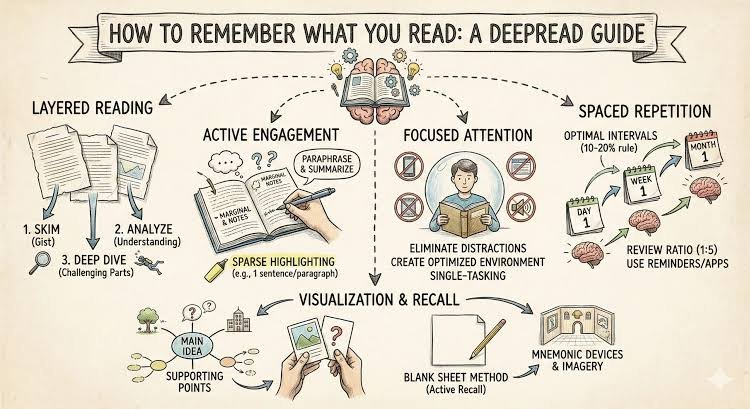
A more realistic foundation is five to ten minutes, attached to something that already happens daily: right after brushing your teeth, during a commute, while waiting for coffee to brew. These windows exist constantly, even in a packed schedule, and they're what actually sustain the habit long-term.
Attach It to an Existing Habit, Not a New Decision
New habits are fragile when they depend on remembering to start them. Pairing reading with something you already do automatically removes that decision entirely. "After I get into bed" or "while my lunch is in the microwave" works better than "I'll read sometime today," because the existing habit becomes the trigger instead of motivation.
Pick Books That Are Easy to Return To
A dense, demanding book can be worth reading, but it's a poor choice for building the habit itself. Books that are easy to pick back up, clear writing, shorter chapters, engaging pacing, make the five-minute window feel welcoming rather than like unfinished homework waiting to be dealt with.
Once the habit itself is solid, it becomes much easier to tackle harder, slower books, because returning to reading no longer requires convincing yourself to start.
Let Go of Finishing Everything
Part of what makes reading feel heavy is the unspoken rule that a book, once started, must be finished. This turns picking up a new book into a bigger commitment than it needs to be, and it quietly discourages starting anything that might not be loved by page fifty.
Treating a book as optional to finish lowers the stakes of starting one in the first place, and ironically, that often leads to finishing more books overall, simply because starting them stops feeling risky.
Track Minutes, Not Chapters
Measuring progress by chapters can feel discouraging on a day when only a few pages get read.
Tracking minutes spent instead keeps the measurement honest: five minutes today is still a win, even if it doesn't move the plot very far. Over weeks, those small sessions add up to far more reading than the rare, ambitious hour-long sessions that never actually happen.
The Habit Beats the Plan
A reading goal built around rare free time will keep failing for the same reason every time, free time doesn't show up reliably. A reading habit built around small, repeated moments in an already busy day doesn't depend on anything unusual happening. It just needs to happen again tomorrow, the same small way it happened today.




Comments (0)
No comments yet. Be the first to comment!