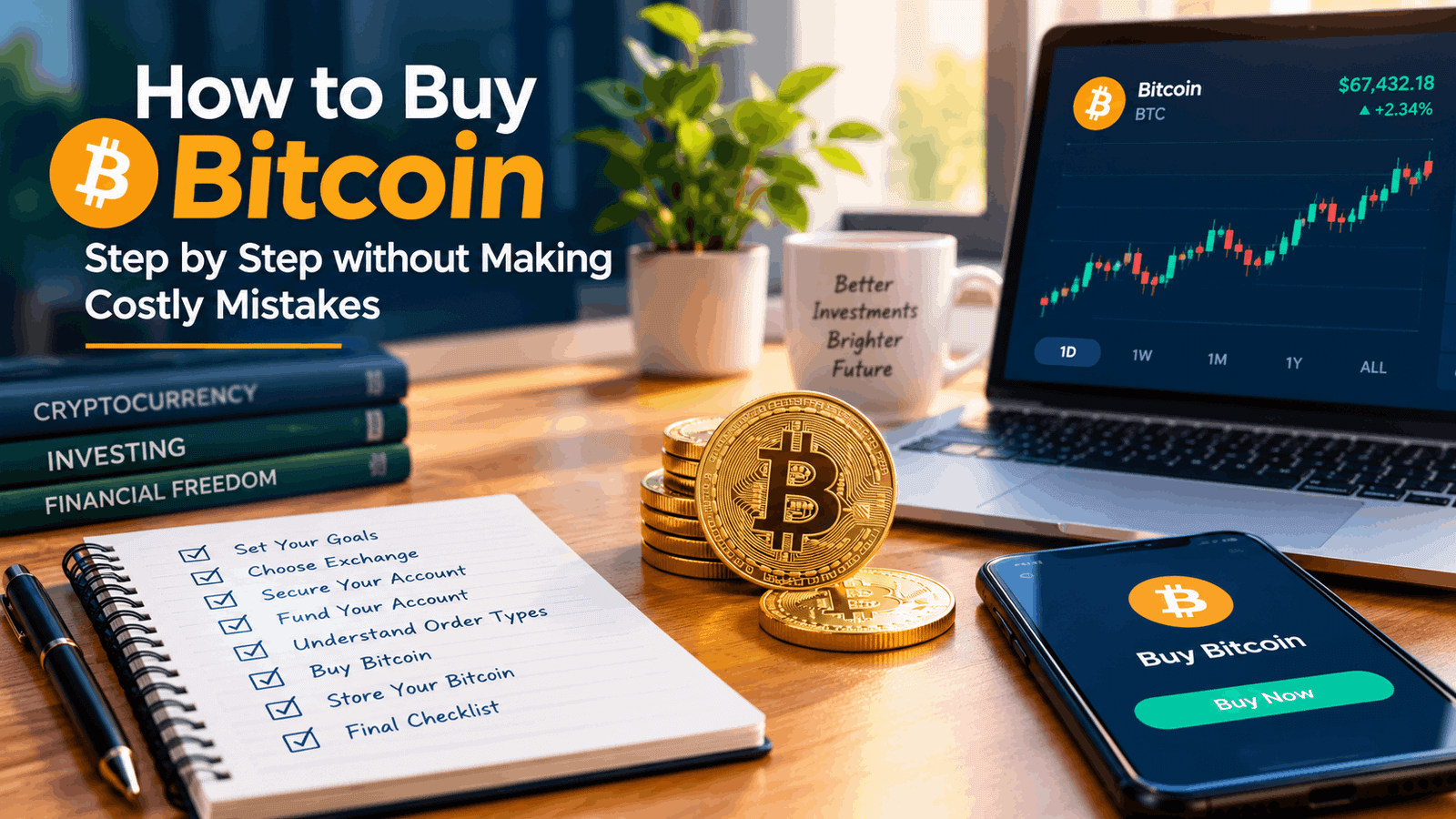
Buying your first Bitcoin isn't hard. Tapping "buy" takes seconds. What actually trips people up is everything that happens before that tap, and after it.
Bitcoin can be bought in tiny fractions, so you don't need thousands of dollars to get started. But prices swing wildly, and unlike a card payment, a crypto transaction is nearly impossible to undo. The FTC has repeatedly warned that crypto values can shift fast and that these payments rarely come with a safety net.
There's another catch. Your bank protects your money with deposit insurance. Bitcoin doesn't work that way. If you're managing your own wallet and you lose your keys, or send coins to the wrong address, that money is often gone for good.
A little preparation can therefore prevent expensive problems later.
Step 1: Know Your Why and Your Limit
Before you open an exchange app, ask yourself why you're buying. Curiosity? A long-term bet? A specific purchase? Your answer shapes how much you buy and how you store it.
More important: decide what you can afford to lose. Past gains don't guarantee future ones, and the FTC is blunt about that. Set a budget that won't touch your rent, your emergency fund, or your other financial goals. If you have $500 to spare, starting with $50 or $100 is plenty to learn the ropes.
And never borrow money to buy Bitcoin. If the price drops while you're still paying off the loan, you're stuck with debt and a shrinking asset at the same time.
Step 2: Pick a Trustworthy Exchange
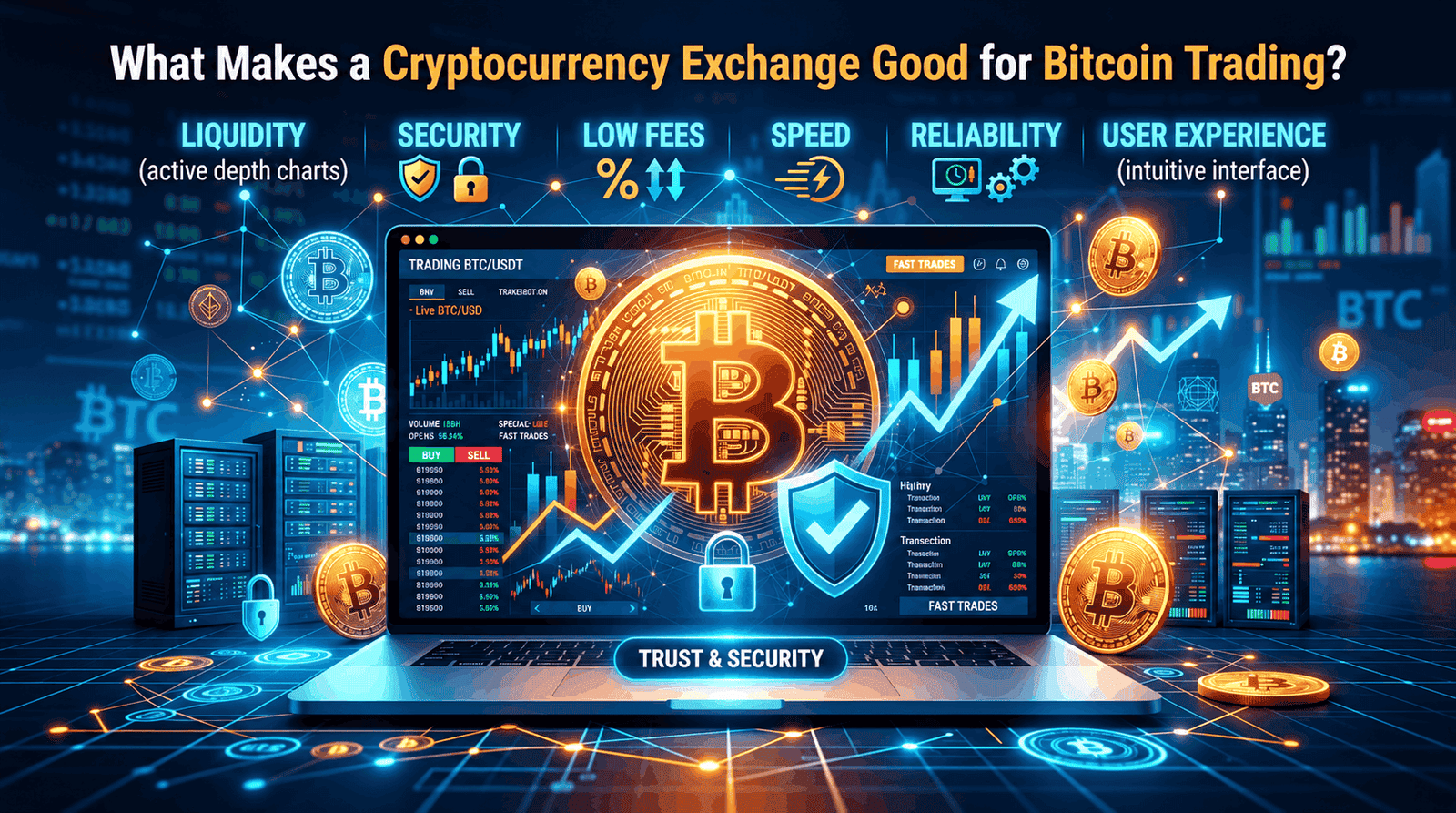
The first thing to look out for is that the advertised fee is the only cost you need consider. In most cases, this won’t be true – a “cheap” platform may have higher spreads or other charges. It’s worth reading carefully through what the exchange says about fees, security, how they’ll set up your account, and their support.
It’s also a good idea to double-check before making a purchase by looking at the transaction preview to ensure what you see advertised is actually the amount you’re paying.
Finally, don’t forget to ensure all your safety measures are covered including 2FA, notifications when someone logs in, control over withdrawals and having relevant details on hand regarding the company itself.
If you’re based in Pakistan, don't rely on outdated articles.
The Virtual Assets Act 2026 established a regulatory body called the Pakistan Virtual Assets Regulatory Authority (PVARA). This means that those who operate as a “virtual asset provider” must be appropriately licensed. Old references to the 2018 State Bank’s restriction are also now obsolete – consult the rules published by PVARA ahead of making a choice.
Step 3: Lock Down Your Account
You can only sign up using the official application of the exchange or its website.
You should use a unique password that’s never been used elsewhere (it’s best to make one with a password manager) and ensure 2FA is enabled before depositing a rupee.
No legit customer service rep would ever ask for your seed phrase or private key – treat this as a huge red flag.
Step 4: Fund Your Account the Right Way
Once you're verified, you can add money, usually via bank transfer or card, depending on your location. Before you deposit, check the fees, processing time, limits, and currency conversion costs.
Don't automatically pick the fastest option; it isn't always the cheapest or safest. And never move money to an exchange just because someone on social media told you to. That's a classic setup for the fake-website and guaranteed-return scams the FTC keeps warning people about.
Step 5 – Know Your Order Types First
It’s better to know how ordering works before you buy. Most platforms will give you a few options. Market orders and limit orders.
Market order – Fills your trade right away at the current price. It's fast, but since crypto prices shift constantly, the final price can differ slightly from what you saw moments earlier.
Limit order – You set the highest price you're willing to pay. It only fills if the market reaches that price and there's enough volume.
Neither is "better" overall — what matters is knowing exactly what you're agreeing to before confirming.
Double-check the order summary, review the order summary, check the amount of Bitcoin, cash value, price, fees, and BTC you will actually receive, payment method, and any other charges. Treat this like proofreading a contract before you sign your name.
Step 6 – Buying Bitcoin, Step by Step
This is the part most people are really after.
1. Open the buy screen. Sign into your verified account and select Bitcoin. Watch for similarly named coins or lookalike logos — confirm it's BTC.
2. Enter your amount. Enter dollars or BTC directly. You don't need a whole coin; buying a fraction is normal.
3. Check price and fees. If the numbers look off from what you expected, pause and figure out why before confirming.
4. Confirm the order. Coins may land instantly or take a little time, depending on your payment method.
5. Confirm it went through. Check your balance and history afterward, and keep a record — useful later for tracking gains or taxes.
Step 7 – Where Will You Keep It?
Buying and storing Bitcoin are separate decisions. You can leave coins on the exchange or move them to your own wallet, each with trade-offs.
Exchange storage is low-effort since the platform handles security, but you're trusting their systems.
Hot wallets stay online, handy for everyday use, but that connection makes them a target for hacks and phishing.
Hardware wallets keep keys offline for stronger protection — but lose your recovery phrase and no one can get your coins back.
Guard your seed phrase. Never share it, enter it on random sites, or hand it to anyone claiming to be "support." That's always a scam.
Costly Bitcoin Buying Mistakes to Avoid

Mistake 1: Buying Because Bitcoin Is Suddenly Rising
One of the most common emotional mistakes is buying simply because everyone is talking about Bitcoin. A rapidly rising price can create fear of missing out, or FOMO.
Instead of asking, "How high can Bitcoin go?" ask yourself, "Why am I buying, how much risk can I accept, and what would I do if the price dropped sharply?"
That question encourages planning rather than emotional decision-making.
Mistake 2: Investing Your Emergency Fund
Bitcoin should not replace money you need for rent, food, medical expenses, debt payments, or unexpected emergencies.
Your emergency fund has a different job from a speculative or volatile investment. Keeping those purposes separate can help prevent you from being forced to sell during an unfavorable market period.
Mistake 3: Ignoring Fees
A small fee may not seem important on one transaction. But frequent purchases, withdrawals, currency conversions, and other charges can add up.
Before using a platform, understand its complete fee structure rather than looking only at the headline trading fee.
Mistake 4: Trusting Guaranteed Bitcoin Profits
This is one of the biggest red flags in cryptocurrency.
The FTC warns that scammers often promise large profits, guaranteed returns, or easy money. Genuine investments cannot provide a guaranteed profit simply because someone claims to have a secret strategy.
Be particularly cautious if someone contacts you privately and says they can trade Bitcoin on your behalf.
Mistake 5: Sending Bitcoin to a Stranger
Bitcoin transactions generally cannot be reversed in the same way as many traditional card transactions. The FTC warns that cryptocurrency payments typically lack the same protections and can be difficult to recover once sent.
Never send Bitcoin because someone claims you must pay a government official, unlock an account, receive a prize, secure your funds, or release a withdrawal.
Mistake 6: Clicking Fake Exchange Links
Scammers can create websites that look remarkably similar to legitimate platforms. Instead of clicking a link in an unexpected message, independently navigate to the official website or application.
The FTC recommends avoiding unexpected links and contacting companies through information you know is legitimate.
Final Checklist before Buying Bitcoin
Before you make your first Bitcoin purchase, run through this checklist:
-
Have I decided how much I can afford to invest?
-
Am I using money I do not need for essential expenses?
-
Have I researched the platform?
-
Have I checked its fees and withdrawal rules?
-
Have I verified its regulatory status where applicable?
-
Have I enabled two-factor authentication?
-
Do I understand the order I am placing?
-
Have I reviewed the final price and fees?
-
Do I know where my Bitcoin will be stored?
-
Do I understand the risks of self-custody?
If you can answer these questions confidently, you have moved beyond simply learning how to buy Bitcoin. You have started building a safer process for handling a highly volatile digital asset.
Conclusion
Learning how to buy Bitcoin without losing money does not require complicated technical knowledge. The basic process involves choosing an appropriate platform, creating and securing your account, funding it, reviewing the available order options, purchasing Bitcoin, and deciding how you want to store it.
The more important lesson, however, is that buying Bitcoin should involve preparation rather than excitement or pressure. Bitcoin prices can move rapidly, cryptocurrency transactions can be difficult to reverse, and scams can make an apparently simple purchase surprisingly expensive.
The smartest first Bitcoin purchase is not necessarily the biggest one. It is the one you understand before you make it.

Comments (0)
No comments yet. Be the first to comment!