
Bitcoin
has a feature that makes its monetary system very different from traditional
currencies: its supply is limited, and new coins are created at a predictable
rate.
One
of the key events that occur within this system is the Bitcoin halving. About every four years, the incentive for miners
to add a block on the network is cut in half from new bitcoins awarded per
miner. The last halving took place in April 2024 at which point the block
subsidy dropped from 6.25 BTC down to 3.125 BTC. At present, the next halving
is not speculated until 2028. (Bitcoin)
But
what does this really mean for crypto investors and the larger crypto market?
How
bitcoin halving affects prices is
one of the hottest topics in crypto. Halvings usually precede major market
cycles, but that doesn't mean every halving need to push BTC up.
Let
us look into how halving works and why it is important for price, mining
industry, and long-term supply of Bitcoin.
What Is a Bitcoin Halving?
A
Bitcoin halving is an automatic event which cuts the quantity of freshly
generated bitcoins through mining in half.
Bitcoin
is built to issue a single block roughly every ten minutes. A miner that adds a
block to the blockchain is rewarded with newly created bitcoin plus transaction
fees.
The
new-Bitcoin part of that reward halves every 210,000 blocks.
The
historical schedule looks like this:
|
Halving |
Year |
Block
Reward After Halving |
|
First |
2012 |
25
BTC |
|
Second |
2016 |
12.5
BTC |
|
Third |
2020 |
6.25
BTC |
|
Fourth |
2024 |
3.125
BTC |
|
Fifth |
Estimated
2028 |
1.5625
BTC |
Bitcoin's maximum supply is still limited to 21 million coins. This halving mechanism continually cuts the rate at which coins are released into circulation until new issuance eventually tends towards zero. (Bitcoin)
Why Does Bitcoin Halving Matter?
At
first glance, it appears cutting a mining reward is a technical adjustment only
relevant to miners. However, in truth it can affect multiple segments of the
Bitcoin economy.
The
main effects include:
·
Fewer
new bitcoins entering circulation
·
Lower
potential revenue for miners
·
Greater
importance of transaction fees
·
Changes
in mining profitability
·
Slower
Bitcoin supply growth rate
·
Possible
adjust in supply-demand balance
The
key word there is potential.
Halving
cuts new supply, but the market price of Bitcoin is based on a lot more than
just–and only–supply.
Price
can be affected by demand, interest rates, investor sentiment, between other
factors.
Bitcoin Halving Effect on Price
The
bitcoin halving effect on price is difficult to measure precisely
because a halving does not happen in isolation.
Bitcoin
is known to have had massive price rises during certain intervals after
halvings. That has fostered the notion that halvings are inherently bullish.
Although
that track record is not (or should not be) an indicator of guarantee.
Why Could a Halving Support Higher Prices?
The
supply-side case is simple.
For
context, miners would have previously pushed 900 new BTC into the market a day
from block rewards alone. Now, if the reward in halving was halves the first
amount of newly created bitcoin drops significantly.
The
decrease net supply means that if demand stays strong, but the influx of new
coins decreases, it may be easier to refute almost all supply by having that
balance.
This
is further fueled by large investors, funds, companies or individual buyers who
continue to take in Bitcoin.
In
that situation:
Lower new supply +
stable demand = upward freedom
But
this is not a price prediction, rather an economic framework.
Why Doesn't Bitcoin Always Rise Immediately?
Markets
usually anticipate major events.
Investors
know that Bitcoin halvings are programmed years in advance. Therefore, some
traders may buy before the event rather than waiting until afterward.
This
means the actual halving date does not necessarily produce an immediate price
jump.
There
is another important issue: the reduction in new supply becomes smaller with
every cycle because the amount of newly created bitcoin represents a smaller
percentage of the total circulating supply.
This is one reason some analysts believe the impact of future halvings may become less dramatic than in Bitcoin's early years. Recent analysis has also highlighted that Bitcoin's market has become larger and more mature, with deeper institutional participation and more sophisticated financial products. (CoinDesk)
How Bitcoin Halving Affects Supply
Bitcoin's
scarcity is one of its defining characteristics.
Unlike
fiat currencies, where monetary supply can be changed by central banks and
governments, Bitcoin follows rules encoded into its protocol.
The
maximum supply is 21 million BTC.
However,
those coins are not released into circulation all at once. Mining gradually
introduces new bitcoin into the market.
The
halving slows that process.
Lower Inflation of Bitcoin Supply
In
simple terms, Bitcoin becomes progressively less inflationary in terms of its
new issuance rate.
Before
the 2024 halving, miners received 6.25 BTC for each block.
After
the halving, that reward became 3.125 BTC.
The
next estimated halving will reduce it again to 1.5625 BTC. (Bitcoin)
This
predictable reduction is central to Bitcoin's monetary design.
It also means that Bitcoin's supply growth can be calculated far into the future.
What Happens to Bitcoin Miners After a Halving?
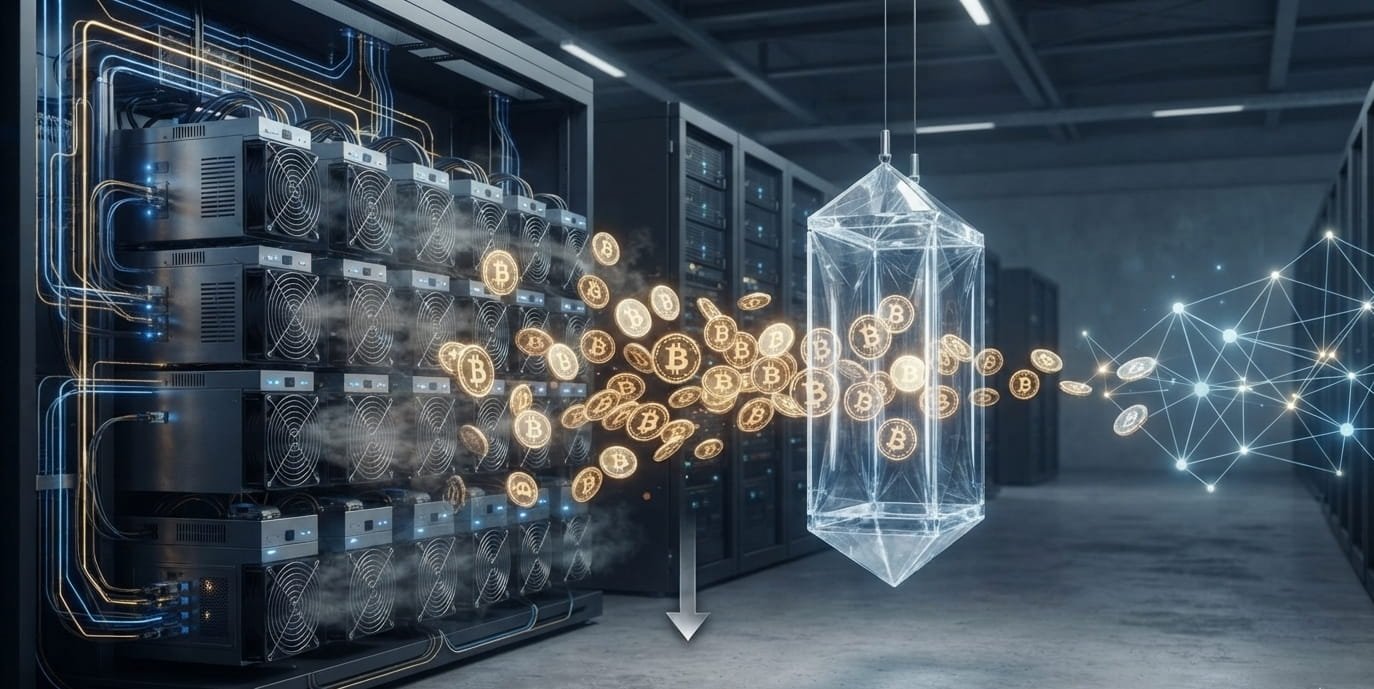
Bitcoin
mining is a competitive business.
Miners
use specialized computers, electricity and infrastructure to process
transactions and secure the network. Their income comes mainly from the block
subsidy and transaction fees.
When
the block subsidy is cut in half, miners immediately face a major revenue
challenge.
For
example, a miner receiving 6.25 BTC per block before a halving would receive
only 3.125 BTC afterward, assuming the other conditions remained unchanged.
That
creates pressure to improve efficiency.
Mining Profitability Becomes More Important
After
a halving, miners generally pay closer attention to:
- Electricity
costs
- Mining
hardware efficiency
- Bitcoin
market price
- Network
difficulty
- Hashrate
- Transaction
fees
- Operating
expenses
Less
efficient mining operations can struggle when Bitcoin's price does not provide
enough revenue to cover their costs.
Recent
market reporting illustrates this pressure. In 2026, mining economics became
increasingly difficult for some operators, with reports of reduced mining
difficulty and some miners operating below profitability.
Could Miners Sell Bitcoin After a Halving?
Yes.
Miners
have expenses even when the Bitcoin price is falling. They may need to sell
some of their Bitcoin holdings to pay for electricity, employees, equipment,
debt or other operating costs.
This
creates an interesting dynamic.
A
halving reduces the amount of new BTC miners receive, while miners still have
many of the same expenses.
Some
inefficient miners may therefore shut down or sell more of their reserves.
Over
time, the network can adjust as less-efficient participants leave and more
efficient miners gain a larger share of the mining market.
Does Bitcoin Halving Reduce Bitcoin's Total Supply?
No.
This
is an important distinction.
A
halving does not remove existing bitcoins from circulation.
It
only reduces the rate at which new bitcoins are created.
Think
of it like a faucet.
Before
the halving, the faucet releases water at one rate. After the halving, it
releases water more slowly. The amount already collected does not disappear.
Bitcoin's
maximum supply remains 21 million coins, while the rate of new issuance
gradually declines.
Frequently Asked Questions About Bitcoin Halving
How often does
Bitcoin halving happen?
Bitcoin's
mining reward is programmed to halve every 210,000 blocks, which is roughly
every four years. The exact calendar date can vary because blocks are not mined
at exactly ten-minute intervals.
When was the latest
Bitcoin halving?
The latest
Bitcoin halving occurred in April 2024. The block reward dropped from 6.25 BTC
to 3.125 BTC. (Bitcoin)
When is the next
Bitcoin halving?
The next
halving is currently estimated to occur in 2028 at block 1,050,000. The reward
is expected to fall to 1.5625 BTC.
Does Bitcoin halving
guarantee a price increase?
No. A halving
reduces the rate of new Bitcoin issuance, but it does not guarantee higher
prices. Demand, liquidity, investor sentiment, regulation and macroeconomic
conditions can all influence Bitcoin's price.
Does halving make
Bitcoin more scarce?
Yes, in terms
of new issuance. Existing Bitcoin is not destroyed, but fewer new coins are
added to circulation after each halving.
Final Thoughts
The bitcoin halving effect on price is best understood through
Bitcoin's supply-and-demand system.
Every halving reduces the number of new bitcoins awarded to miners. That
slows the growth of Bitcoin's circulating supply and increases the economic
pressure on miners to operate efficiently.
The 2024 halving reduced the block reward to 3.125 BTC, while the next
expected halving in 2028 will reduce it again to 1.5625 BTC.
But a halving is not a magic button for higher prices.
The strongest way to understand its potential impact is to watch Bitcoin
demand, available market supply, mining profitability, institutional activity
and broader economic conditions together.
For investors researching Bitcoin, the halving is therefore less about
predicting a specific price and more about understanding how the network's
monetary policy works.
If you follow Bitcoin's long-term development, keep an eye on both sides
of the market: how quickly new BTC enters circulation and how strong demand
is for the coins already available.



Comments (0)
No comments yet. Be the first to comment!