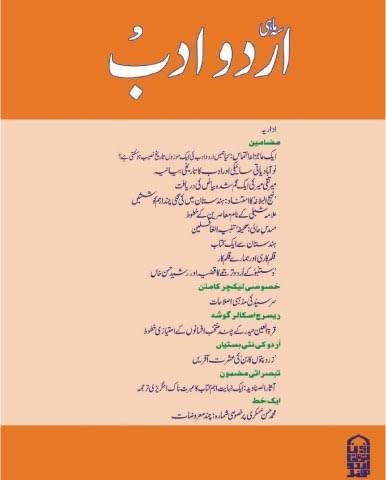
Urdu literature is one of South Asia's rich and influential literary traditions. It includes poetry, ghazal, nazm, short stories, novels, essays, criticism and other forms of creative writing.
For centuries, Urdu writers and poets have used the language to express love, spirituality, philosophy, social concerns, politics, human emotions and everyday life. The tradition developed through interactions between different languages and literary cultures across the Indian subcontinent.
Today, Urdu literature remains important in both Pakistan and India and continues to reach new readers through books, websites, digital libraries, poetry platforms and social media.
What Is Urdu Literature?
Urdu literature refers to creative and scholarly writing produced in the Urdu language.
It is particularly well known for its poetry. The ghazal is one of its most recognizable literary forms, but Urdu literature is much broader than ghazal poetry.
It also includes:
- Nazm
- Ghazal
- Masnavi
- Marsiya
- Qasida
- Rubai
- Afsana
- Novel
- Drama
- Essay
- Literary criticism
- Biography and autobiography
The National Council for Promotion of Urdu Language describes a long literary development from early Dakhni works through the classical period and into modern poetry and prose.
A Brief History of Urdu Literature
The history of Urdu literature developed gradually rather than appearing at one particular moment.
Early literary Urdu developed in different regions and was influenced by local Indian languages as well as Persian and Arabic literary traditions.
The Deccani or Dakhni tradition played an important early role. The National Council for Promotion of Urdu Language identifies Kadam Rao Padam Rao, written by Nizami between 1421 and 1434, as the earliest extant work in this tradition. It also identifies Sabras by Wajhi as an important early prose classic.
Over time, Urdu literary expression expanded toward northern India.
Poets such as Wali Dakhni helped influence the development of Urdu poetry in Delhi, contributing to the growth of the language as a major literary medium.
The Classical Period of Urdu Literature
The 18th and 19th centuries are widely regarded as an important classical period of Urdu poetry.
During this era, Urdu poetry developed sophisticated forms and styles, particularly the ghazal.
Major classical poets included:
- Mir Taqi Mir
- Sauda
- Khwaja Mir Dard
- Insha
- Mushafi
- Nasikh
- Aatish
- Momin
- Zauq
- Mirza Ghalib
The National Council for Promotion of Urdu Language identifies these centuries as a golden period of classical Urdu poetry.
What Is Urdu Ghazal?
The ghazal is one of the most famous forms of Urdu poetry.
A ghazal is traditionally composed of individual couplets called sher, following particular poetic conventions involving rhyme, refrain and meter.
Ghazal poetry can explore themes such as:
- Love
- Separation
- Beauty
- Loneliness
- Spirituality
- Philosophy
- Human emotions
- Social and political experiences
The history of the ghazal is much older than Urdu itself. It developed through Arabic and Persian literary traditions before becoming an important form in Urdu.
Urdu's ghazal tradition became particularly influential during the classical period, with poets such as Mir Taqi Mir and Mirza Ghalib becoming major figures.
Mir Taqi Mir
Mir Taqi Mir is one of the most important names in classical Urdu poetry.
His poetry is particularly associated with emotional depth, love, separation, loss and human suffering.
Mir lived during a period of significant political and social change in the Indian subcontinent. His poetry often reflects the emotional atmosphere of his time.
His contribution to the development of the Urdu ghazal made him one of the central figures of classical Urdu literature.
Mirza Ghalib
Mirza Ghalib is perhaps one of the most internationally recognizable names in Urdu literature.
Born in 1797, Ghalib wrote poetry in both Urdu and Persian. His Urdu ghazals are known for complex ideas, philosophical questions, unusual imagery and multiple layers of meaning.
Ghalib's importance is not limited to poetry.
His letters also played an important role in the development of modern Urdu prose. The National Council for Promotion of Urdu Language notes that Ghalib's letters helped establish a standard for modern prose.
This combination of poetry and prose makes Ghalib particularly important when studying the development of Urdu literature.
Allama Iqbal
Allama Muhammad Iqbal is another major figure in Urdu literature.
Iqbal's poetry frequently explored ideas of selfhood, spirituality, action, intellectual development and the future of society.
The National Council for Promotion of Urdu Language describes Iqbal as the outstanding Urdu poet of the 20th century.
His poetry also demonstrates how Urdu literature evolved beyond traditional romantic themes into philosophical, social and political expression.
Urdu Literature and Social Change
Urdu literature has often reflected the social and political circumstances of its time.
Writers have used poetry and prose to discuss poverty, colonialism, freedom, social inequality, identity, migration, politics and human suffering.
Research on Urdu ghazal also describes it as a literary form capable of reflecting the social and political conditions of the subcontinent.
This is one reason Urdu literature remains relevant.
It is not simply a collection of old poems.
It is also a record of changing ideas, emotions and societies.
Urdu Prose
Although Urdu poetry is particularly famous, prose has an equally important place in Urdu literature.
Urdu prose includes:
- Short stories
- Novels
- Essays
- Letters
- Biographies
- Literary criticism
- Travel writing
- Drama
The 19th century saw important developments in Urdu prose, while the 20th century witnessed the growth of the Urdu novel and short story. The National Council for Promotion of Urdu Language highlights writers such as Premchand, Saadat Hasan Manto, Qurrat-ul-Ain Hyder, Abdullah Hussain and Intizar Husain among important figures in modern Urdu prose.
Saadat Hasan Manto and Urdu Short Stories
Saadat Hasan Manto is one of the best-known writers of modern South Asian literature.
His short stories often explored difficult realities of society, human behavior and the consequences of political and social conflict.
Manto demonstrated that Urdu literature could address uncomfortable subjects rather than focusing only on romance or traditional poetry.
His work remains widely discussed by readers and literary scholars.
Urdu Novel
The Urdu novel developed significantly during the 19th and 20th centuries.
Writers such as Nazir Ahmad, Ratan Nath Sarshar and Mirza Hadi Ruswa contributed to the early development of the Urdu novel. Later writers expanded the form into more complex explorations of society, identity and history.
The novel gave Urdu writers a larger space to develop characters, settings and longer narratives.
Major Forms of Urdu Literature
Understanding the major forms of Urdu literature can make it easier for new readers to explore the tradition.
Ghazal
A lyrical poetic form traditionally composed of independent couplets following particular structural conventions.
Nazm
Unlike a traditional ghazal, a nazm generally develops a connected subject or theme throughout the poem.
Masnavi
A longer narrative poem written in rhyming couplets and often used for storytelling.
Marsiya
A form of elegiac poetry, particularly associated with mourning and the events of Karbala.
Qasida
A formal poetic genre traditionally associated with praise and other subjects.
Afsana
An Urdu short story, an important form of modern Urdu prose.
Novel
A longer fictional narrative dealing with characters, society, history and human experience.
Why Is Urdu Literature Important?
Urdu literature is important for several reasons.
1. It Preserves History
Literary works often reflect the society and historical circumstances in which they were created.
2. It Preserves Language
Poetry and prose preserve vocabulary, expressions, styles and cultural references.
3. It Expresses Human Emotions
Love, grief, hope, loneliness, spirituality and philosophical questions appear throughout Urdu literature.
4. It Encourages Critical Thinking
Literary works often ask readers to consider society, morality, politics and human behavior.
5. It Connects Generations
Classical poetry continues to be read by modern audiences, creating a connection between older and younger generations.
Urdu Literature in the Digital Age
The internet has changed the way people discover and read Urdu literature.
Readers no longer need to depend entirely on physical libraries.
Digital platforms now provide access to:
- Urdu poetry
- Ghazals
- Literary criticism
- Historical texts
- Biographies
- Classical writers
- Modern writers
- Audio recitations
- Digital manuscripts
For example, Rekhta's digital explorer organizes Urdu literary material into dozens of categories, including ghazal, qita, masnavi and other forms.
Academic institutions have also created digital resources. Columbia University's Urdu Ghazal Reader, for example, provides selected ghazals from several major poets including Vali, Dard, Mir, Ghalib and Iqbal.
This digital transformation can help younger readers discover Urdu literature in new ways.
How to Start Reading Urdu Literature
If you are new to Urdu literature, you don't need to begin with difficult academic books.
Start with poetry you can understand and enjoy.
A simple path could be:
Step 1: Read a few famous ghazals.
Step 2: Learn basic terms such as sher, matla, maqta, qafiya and radif.
Step 3: Explore Mir and Ghalib.
Step 4: Read selected works of Iqbal.
Step 5: Explore modern Urdu short stories.
Step 6: Read writers such as Manto.
Step 7: Gradually explore literary criticism and history.
This approach makes Urdu literature less intimidating for beginners.
Famous Urdu Writers and Poets to Explore
Some important names for beginners include:
- Mir Taqi Mir
- Mirza Ghalib
- Allama Iqbal
- Muhammad Quli Qutb Shah
- Wali Dakhni
- Mir Anees
- Dabeer
- Sir Syed Ahmad Khan
- Altaf Hussain Hali
- Muhammad Husain Azad
- Premchand
- Saadat Hasan Manto
- Faiz Ahmed Faiz
- Qurrat-ul-Ain Hyder
- Josh Malihabadi
The literary tradition is much larger than this list, but these writers provide a useful starting point for exploring different periods and genres.
Final Thoughts
Urdu literature is much more than famous poetry and romantic ghazals.
It is a large literary tradition containing poetry, prose, novels, short stories, essays, criticism and many other forms of expression.
From the classical poetry of Mir and Ghalib to the philosophical poetry of Iqbal and the modern short stories of Manto, Urdu writers have explored some of the most important questions of human life and society.
The digital age has also created new opportunities for readers to discover this heritage.
Whether you are a student, poetry lover or someone discovering Urdu literature for the first time, there is an enormous world of writing waiting to be explored.
Urdu literature connects language, history, culture and human emotion—and that is what makes it continue to matter today.

Comments (0)
No comments yet. Be the first to comment!