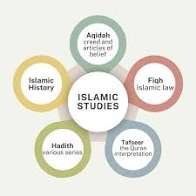
Islamic Studies is a broad field that explores Islam through its religious teachings, history, intellectual traditions, culture, civilization and social development. It includes the study of the Quran, Hadith, Sunnah, Islamic history, Sirah, Fiqh, Islamic ethics, theology and Muslim civilization.
For beginners, Islamic Studies provides a structured way to understand the basic beliefs and practices of Islam while also exploring how Islamic thought and civilization developed over centuries. Academic Islamic Studies is also an interdisciplinary field, meaning researchers may study Islam through history, literature, philosophy, sociology, law, anthropology and other disciplines.
What Is Islamic Studies?
Islamic Studies is the systematic study of Islam and the many intellectual, historical and cultural traditions associated with Muslim societies.
The field is much broader than learning religious practices alone. It can include:
- Quranic studies
- Hadith studies
- Tafsir
- Sirah of Prophet Muhammad (PBUH)
- Islamic jurisprudence and Fiqh
- Islamic theology
- Islamic history
- Islamic philosophy
- Islamic ethics
- Islamic culture
- Islamic civilization
- Islamic literature
- Islamic economics
- Muslim societies and contemporary issues
The academic journal Islamic Studies, published by the Islamic Research Institute in Islamabad, has covered these areas since 1962, including Quran, Hadith, Sirah, law, philosophy, sociology, culture, civilization, history, language and literature.
Why Is Islamic Studies Important?
Islamic Studies can help learners develop a better understanding of Islamic beliefs, historical developments and intellectual traditions.
It also provides context for understanding how Muslim communities developed across different regions and historical periods.
Studying Islam from multiple perspectives can help learners distinguish between primary religious sources, historical interpretation and later cultural developments.
For students and beginners, a structured approach is especially useful because Islamic knowledge covers many interconnected subjects.
1. Quranic Studies
The Quran is the central religious text of Islam and is one of the most important subjects within Islamic Studies.
Quranic Studies can involve examining the Quran's language, themes, interpretation, historical context and transmission.
Traditional Islamic scholarship developed extensive disciplines for understanding the Quran, including Tafsir, Arabic language studies, recitation traditions and the study of occasions of revelation.
Modern academic Quranic research also uses different approaches and disciplines to study the text and its interpretation.
For beginners, an important starting point is to read the Quran with a reliable translation and seek explanations from qualified scholars and trustworthy educational sources.
2. Hadith Studies
Hadith refers to reports concerning the sayings, actions and approvals attributed to Prophet Muhammad (PBUH).
Hadith studies examine the transmission and interpretation of these reports. Traditional scholarship developed detailed methods for evaluating narrators and chains of transmission.
Important concepts in Hadith studies include:
- Isnad
- Matn
- Hadith classification
- Narrator reliability
- Major Hadith collections
- Hadith interpretation
Understanding Hadith is important because the Sunnah provides an essential source for understanding many aspects of Islamic practice.
3. Life of Prophet Muhammad (PBUH)
The study of the life of Prophet Muhammad (PBUH), known as Sirah, is another major part of Islamic Studies.
Sirah introduces learners to important events in the Prophet's life, including his early life, the beginning of revelation, the Makkan period, the migration to Madinah and the development of the early Muslim community.
Studying Sirah can also help explain the historical context surrounding early Islam.
4. Islamic Beliefs
Islamic Studies includes the study of fundamental Islamic beliefs.
These include belief in:
- Allah
- Angels
- Divine books
- Prophets
- The Day of Judgment
- Divine decree
These principles form an important part of Islamic theology and provide a foundation for understanding Islamic religious thought.
5. Five Pillars of Islam
The Five Pillars are among the most commonly studied foundations of Islamic practice.
They are:
1. Shahadah — declaration of faith
2. Salah — prayer
3. Zakat — obligatory charity
4. Sawm — fasting during Ramadan
5. Hajj — pilgrimage to Makkah for those who are able
Learning about these practices gives beginners a basic framework for understanding Muslim religious life.
6. Islamic Jurisprudence and Fiqh
Fiqh refers broadly to Islamic jurisprudence and the human understanding of Islamic legal principles.
It deals with questions related to worship, personal conduct, family matters, financial transactions and other areas of life.
Islamic jurisprudence developed different schools of legal thought and scholarly methodologies. Because legal questions can involve differences of interpretation, readers should consult qualified scholars when seeking religious rulings for specific personal situations.
7. Islamic History
Islamic history covers more than fourteen centuries of developments involving Muslim communities across different parts of the world.
Important areas include:
- Early Islamic history
- Rashidun period
- Umayyad period
- Abbasid period
- Islamic Spain
- Ottoman history
- Muslim societies in South Asia
- Islamic intellectual history
- Modern Muslim societies
The study of early Islam is particularly broad and includes historical, textual and archaeological research. Recent bibliometric research identified recurring themes such as early Islam, Quran, Hadith, Prophet Muhammad, Sufism, archaeology and Islamic history.
8. Islamic Civilization
Islamic civilization developed across a wide geographical area and included contributions in education, science, medicine, mathematics, architecture, literature, philosophy and commerce.
Major intellectual centers emerged in different periods, connecting scholars and communities across regions.
Studying Islamic civilization therefore involves more than political history. It also includes the development of knowledge, institutions, art, architecture and literature.
9. Islamic Ethics and Character
Ethics is another important part of Islamic thought.
Islamic teachings emphasize qualities such as:
- Honesty
- Justice
- Patience
- Mercy
- Responsibility
- Respect
- Charity
- Forgiveness
- Good character
These principles are studied in relation to individual behavior as well as social relationships.
10. Islamic Culture and Society
Islamic culture has developed differently across regions while sharing common religious foundations.
Muslim communities in South Asia, the Middle East, Africa, Central Asia, Southeast Asia and other regions have developed distinctive languages, traditions, architecture, literature and customs.
This makes Islamic Studies an interdisciplinary field that can examine both religious traditions and the lived experiences of Muslim societies. Academic descriptions of the field specifically include culture, sociology, anthropology, literature and history alongside traditional Islamic disciplines.
11. Islamic Philosophy and Intellectual Thought
Islamic intellectual history includes discussions about knowledge, reason, ethics, theology and philosophy.
Muslim scholars contributed to debates concerning philosophy, medicine, mathematics, astronomy, language and logic.
The intellectual tradition also includes theological schools and different approaches to questions concerning faith, reason and human knowledge.
12. Islamic Studies in the Modern World
Islamic Studies continues to develop in the modern academic environment.
Contemporary research may explore topics such as:
- Islam and modern society
- Islamic finance
- Muslim communities
- Islamic law
- Gender and society
- Interfaith relations
- Islamic environmental ethics
- Digital Islamic studies
- Muslim identity
- Contemporary Islamic thought
Modern Islamic Studies is therefore not limited to studying historical texts. Researchers also examine how Islamic traditions interact with contemporary social, political, technological and cultural developments.
How Beginners Can Start Studying Islam
Someone who is new to Islamic Studies does not need to study every subject at once.
A simple learning path can be:
Step 1: Learn the Fundamentals
Start with basic Islamic beliefs and the Five Pillars of Islam.
Step 2: Read the Quran
Read the Quran with a reliable translation and accessible explanation.
Step 3: Study the Life of Prophet Muhammad (PBUH)
Learning Sirah provides historical context for early Islam.
Step 4: Learn Basic Hadith Studies
Understand what Hadith is and why scholars developed methods for examining reports.
Step 5: Explore Islamic History
After learning the foundations, explore major periods of Islamic history and civilization.
Step 6: Study Specialized Subjects
Once the basics are clear, learners can explore Fiqh, Tafsir, Islamic philosophy, Islamic economics, Islamic literature or other areas.
Islamic Studies and Academic Research
Islamic Studies is also an important academic field.
The journal Islamic Studies is a peer-reviewed research publication and has been published by the Islamic Research Institute in Islamabad since 1962. Its scope demonstrates how broad the field has become, covering traditional Islamic disciplines as well as history, sociology, economics, culture, language, literature and science and technology when connected with Islamic Studies.
This interdisciplinary approach makes Islamic Studies relevant to researchers from different academic backgrounds.
Frequently Asked Questions
What is Islamic Studies?
Islamic Studies is the study of Islam, including the Quran, Hadith, Sirah, Islamic law, theology, history, culture, civilization and intellectual traditions.
What are the main subjects of Islamic Studies?
Major subjects include Quranic Studies, Hadith, Tafsir, Sirah, Fiqh, Islamic history, theology, ethics, culture and Islamic civilization.
Why should students study Islamic Studies?
Islamic Studies can help students understand Islamic beliefs, historical developments, intellectual traditions and the cultural influence of Muslim societies.
Is Islamic Studies only about the Quran?
No. The Quran is central, but Islamic Studies also includes Hadith, Sirah, Fiqh, theology, history, philosophy, culture, civilization and other related disciplines.
How can beginners learn Islamic Studies?
Beginners can start with basic beliefs and practices, then study the Quran, Sirah, Hadith and Islamic history before moving toward specialized subjects.
Conclusion
Islamic Studies is a broad field that connects Quranic knowledge, Hadith, Islamic history, jurisprudence, theology, ethics, culture and civilization. It can be studied from both traditional religious and academic perspectives.
For beginners, the best approach is to start with the fundamentals and gradually explore more specialized subjects. For academic researchers, Islamic Studies provides a wide field covering religious texts, history, society, philosophy, law, culture and contemporary Muslim life.
As interest in the history, teachings and intellectual traditions of Islam continues, well-researched and carefully sourced Islamic Studies content can provide useful educational resources for students and general readers.

Comments (0)
No comments yet. Be the first to comment!