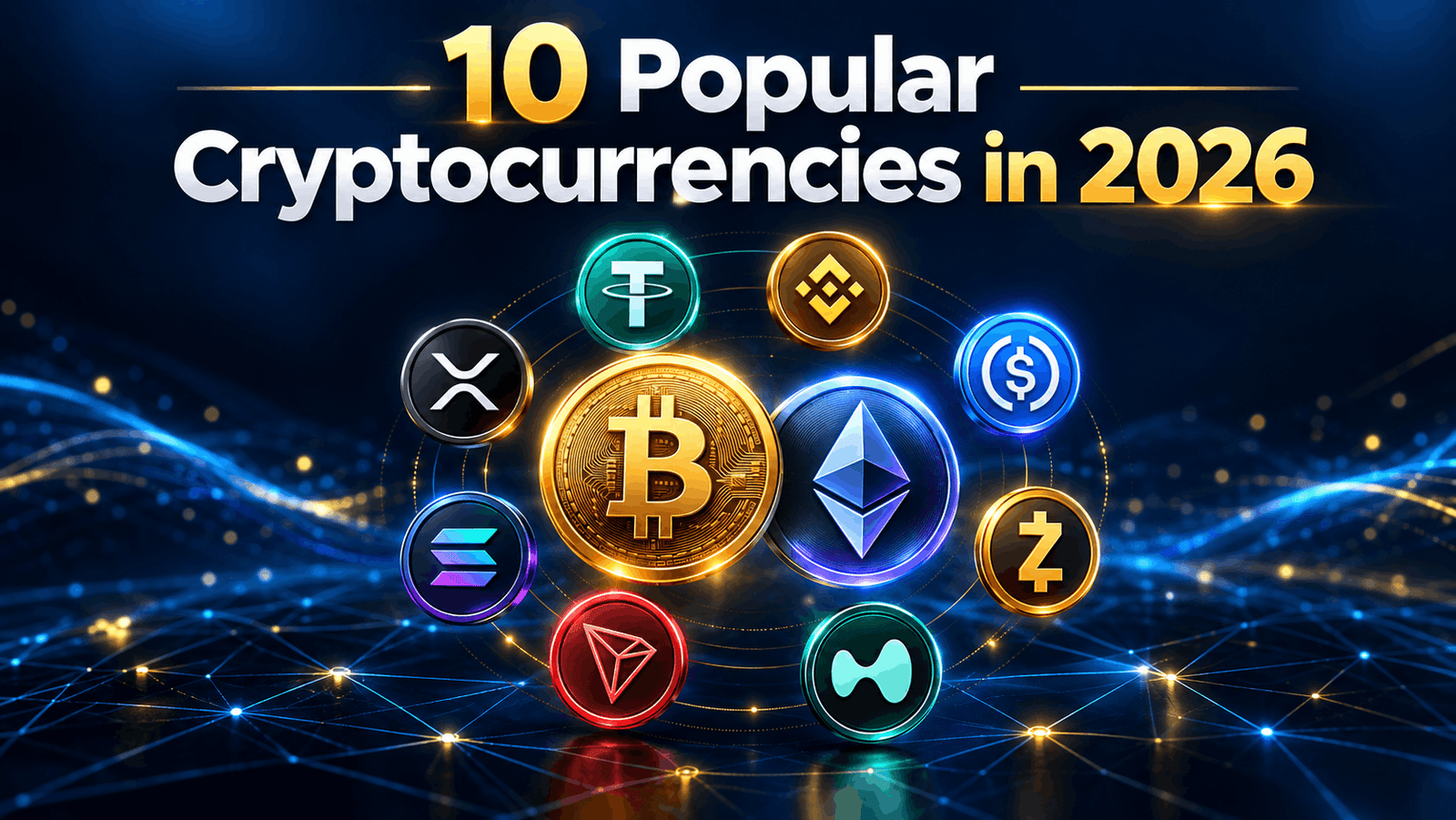
Cryptocurrency
is no longer an outlying experiment, but newcomers can still get confused in
the terminology. In 2026, the market will be structured by a combination of
digital store-of-value assets, smart-contract platforms, payment networks,
stablecoins, and privacy-oriented protocols. For US investors, the most useful
starting point is to understand what each asset does, what drives demand, and
what risks come with it.
This article reviews the top
cryptocurrencies in 2026. The order is mostly dependent on market
capitalisation, which is determined by multiplying an asset's price by its
circulating supply. A high-priced coin
is not automatically larger than a low-priced coin, and a low unit price does
not mean an asset is “cheap.”
1. Bitcoin
(BTC)
Bitcoin
remains the benchmark for the whole cryptocurrency industry. Its covered
supply, first-mover advantage, deep liquidity, and growing institutional
recognition support its role as a digital store of value. Many investors
compare Bitcoin with gold because both are viewed as scarce assets outside
traditional monetary systems. For beginners, BTC is frequently the easiest
asset to understand for newcomers, but that doesn't mean it's risk-free. Its
price can still fluctuate drastically.
2. Ethereum
(ETH)
Ethereum
continues to be the dominant platform for smart contracts and decentralised
apps. Its blockchain enables decentralised finance, tokenised assets, digital
collectibles, and thousands of Web3 projectsEther is used to pay network fees
and secure the proof-of-stake network. Think of Ethereum as programmable
financial infrastructure rather than just another payment coin, although
network fees, competition, and technical changes are still significant dangers.
3. Tether (USDT)
Tether
is the most widely used stablecoin, designed to track the value of the United
States dollar. Unlike extremely volatile cryptocurrencies, USDT is primarily
used for trading, transfers, liquidity management, and value movement across
platforms. It is not the same as holding dollars in a US bank account: users
should consider issuer, reserve, redemption, platform, and regulatory risks.
4. BNB (BNB)
BNB
powers a broad ecosystem connected to Binance and BNB Chain. Users can use it
for transaction fees, decentralized applications, trading-related benefits, and
other network services. Its position reflects the scale of that ecosystem, but
US investors should also pay attention to exchange access, legal developments,
centralization, and platform-specific risks.
5. XRP (XRP)
XRP
is designed for fast settlement and efficient transfers on the XRP Ledger. It
remains especially visible in discussions about cross-border payments and
financial infrastructure. XRP’s market position is supported by its
recognizable brand, active community, exchange liquidity, and continuing
interest in blockchain-based payment systems. Its history also shows why US
investors should check current regulatory and legal information instead of
relying on old headlines.
6. USD Coin (USDC)
USD
Coin is another major dollar-pegged stablecoin. It is widely used for trading,
payments, treasury management, and decentralized finance. USDC is often
selected by users and businesses that want a stable digital dollar with a
strong emphasis on transparency and regulated financial infrastructure.
“Stable” describes the target price, not a complete absence of risk.
7. Solana (SOL)
Solana
is known for fast transactions and relatively low network costs. Its ecosystem
includes decentralized exchanges, consumer applications, gaming projects,
digital collectibles, and financial protocols. SOL is used for network fees,
staking, and participation in the Solana economy. It remains a major competitor
to Ethereum for high-volume applications, though network reliability, token
economics, and ecosystem concentration deserve attention.
8. TRON (TRX)
TRON
has established a resilient position in the transfer of digital assets,
particularly in the movement of stablecoins. Its low-cost network is used for
payments, transfers, and decentralized applications. TRX’s continued presence
near the top of market-cap rankings demonstrates that practical transaction
utility can remain powerful even when market narratives shift, but beginners
should compare network use with governance and counterparty risks.
Hyperliquid
represents the rise of decentralized trading infrastructure. Its ecosystem
focuses on on-chain markets and perpetual futures, giving traders a platform
designed for speed and liquidity. HYPE’s appearance among leading assets
highlights the value assigned to specialized DeFi protocols, but perpetual
futures are complex and highly risky. This is not a beginner-friendly place to
start.
10. Zcash (ZEC)
Zcash is one of the best-known privacy-focused cryptocurrencies. It offers shielded transactions designed to provide stronger financial privacy than transparent blockchains. Its position in the 2026 top tier reflects renewed attention to privacy, censorship resistance, and user control over transaction information. Privacy technology can be valuable, but it may also face additional exchange, compliance, and regulatory scrutiny.
A beginner’s checklist for US investors
Market-cap rankings are a starting
point, not an investment checklist. Before purchasing any cryptocurrency, ask:
- What
is the use case?
Can you explain in one sentence why the network or token exists?
- How
much risk can you handle? Crypto can lose substantial value
quickly, even when a project is well known.
- How
will you custody it? Compare reputable platforms,
wallet security, fees, and recovery procedures.
- What
are the US tax and legal implications? Keep records of
purchases, sales, swaps, rewards, and transfers, and check current IRS and
regulatory guidance.
- Are
you investing or speculating? A long-term thesis is different
from chasing a short-term price move.
The crypto market changes continuously. A coin can rise or fall several places in a short period as prices, circulating supplies, and investor sentiment move. Always verify live data through a reputable market-data provider before making a decision.
Final takeaway
The leading cryptocurrencies of 2026 show how broad the digital-asset sector has become. Bitcoin leads as a scarce digital asset, Ethereum and Solana power applications, USDT and USDC provide dollar-based liquidity, and projects such as BNB, XRP, TRON, Hyperliquid, and Zcash serve specialized ecosystems. For beginners in the United States, the smart move is not to buy everything on the list. Learn the use case, understand the downside, verify the rules, and only risk money you can afford to lose.


Comments (0)
No comments yet. Be the first to comment!